In September 2026, the median rent for a new lease in Manhattan was $4,900 to $5,395 a month, depending on the report you read. Brooklyn sat at $4,000 to $4,300, and Northwest Queens (Long Island City, Astoria, Sunnyside, Woodside) at $3,742. These are the prices you face when you sign a lease today, and they are at or near record highs.
The “average rent in NYC” you see quoted elsewhere is often much lower, because it mixes in people who signed years ago. The city’s own survey put the median rent paid by all renter households at $1,641 a month in 2023. Below: current rents by borough and apartment size, why prices keep climbing, how much income landlords ask for, what you pay on move-in day, and what a furnished room costs all-in.
Average rent in NYC right now (fall 2026)
New York rent prices depend on two things: which borough you rent in, and whether you look at new leases or at what tenants already pay. The table shows both.
Borough
Median rent, new leases (Sept 2026)
Manhattan
$4,900 to $5,395
Brooklyn
$4,000 to $4,300
Queens
$3,742 (Northwest Queens)
Bronx
no monthly report
Staten Island
no monthly report
New York City
no single figure
Borough
Median rent paid by all renters (2023)
Manhattan
$2,148
Brooklyn
$1,650
Queens
$1,740
Bronx
$1,280
Staten Island
$1,600
New York City
$1,641
Sources: new-lease medians from The Real Deal Rental Report by appraiser Jonathan Miller and from Corcoran’s NYC rental market report, both for September 2026. Medians paid by all renters come from the 2023 New York City Housing and Vacancy Survey (NYC HPD), the latest official count.
Why two reports give two Manhattan numbers
Market reports track different sets of leases. The Miller report puts the September 2026 Manhattan median at $4,900, up 7.7% from a year earlier, with a record of $5,000 set in July. Corcoran’s report puts it at $5,395, up 9% year over year and also a record. The gap of almost $500 comes from method, not from a split market. Both point the same way: up.
New leases vs what tenants already pay
The $1,641 citywide figure includes about 996,600 rent-stabilized apartments, 41% of all rentals in 2023, and many long-term tenants. If you are moving to New York now, it tells you little about your budget. The city survey also measured apartments that were actually on the market in 2023: their median asking rent was $3,000, and $2,500 for rent-stabilized units. Today’s listings start well above that.
Comparing the two biggest boroughs in detail? Our Brooklyn vs Manhattan guide breaks down rent, commute and daily costs side by side.
Average rent by apartment size
Size moves the price more than anything else. These are average rents for leases signed in 2026, from Corcoran’s monthly reports for Manhattan and Brooklyn:
Apartment size
Manhattan
Studio
$4,014 (June 2026)
One-bedroom
$5,436 (Sept 2026)
Two-bedroom
nearly $8,500 (Sept 2026)
Three-bedroom
not published
Apartment size
Brooklyn (Sept 2026)
Studio
$3,521
One-bedroom
$4,218
Two-bedroom
$5,708
Three-bedroom
$6,885
How much is a one-bedroom in NYC?
A one-bedroom averaged $5,436 a month in Manhattan and $4,218 in Brooklyn in September 2026. In Manhattan that was 6% more than a year earlier, and still $50 below the July peak. In Brooklyn, one-bedroom rent rose 5% year over year.
How much is a two-bedroom in NYC?
A Manhattan two-bedroom reached an all-time high of nearly $8,500 a month in September 2026. In Brooklyn the average was $5,708. Split between two roommates, that is about $2,850 each in Brooklyn before utilities.
Why NYC rents keep rising
Rents rise when many people compete for few apartments. In New York, every measure of supply is tight:
- Record-low vacancy. Only 1.41% of rentals citywide were vacant and available in 2023, one of the lowest rates since the survey began in 1965. In 2021 it was 4.54%. In Manhattan, the vacancy rate was 1.54% in September 2026.
- Fewer listings. Manhattan had 5,015 active listings in September 2026, 16% fewer than a year earlier. Brooklyn had 3,428, down 25%.
- Bidding wars. 16% of new Manhattan leases in September 2026 went above the asking rent.
- Size. In Manhattan, a two-bedroom averaged about $3,000 a month more than a one-bedroom in September 2026.
Rent-stabilized apartments: a freeze for 2026-27
The NYC Rent Guidelines Board voted on June 25, 2026 to set a 0% increase for both one-year and two-year leases on rent-stabilized apartments starting between October 1, 2026 and September 30, 2027. The freeze applies only to stabilized units. Market-rate apartments, which make up most new listings, are not covered.
How much income you need to rent in NYC
Most NYC landlords expect your yearly income to be at least 40 times the monthly rent, and Columbia University’s off-campus housing office describes the same rule. If you don’t qualify alone, landlords ask for a guarantor earning 80 to 100 times the rent.
Monthly rent
Income needed (40x)
$2,000
$80,000
$3,000
$120,000
$4,300
$172,000
$5,395
$215,800
Monthly rent
Guarantor income (80x to 100x)
$2,000
$160,000 to $200,000
$3,000
$240,000 to $300,000
$4,300
$344,000 to $430,000
$5,395
$431,600 to $539,500
New to the U.S., or without a U.S. credit history? Read how apartment guarantors work before you apply.
What you pay on move-in day
Rent is only part of the bill. Before you sign, count the cash you need upfront and the costs the rent doesn’t cover:
- Security deposit: by New York law, no more than one month’s rent.
- Application fee: a background or credit check costs you the actual cost or $20, whichever is less.
- Broker fee: since June 11, 2025, under the FARE Act, a broker hired by the landlord cannot charge you a fee. You pay a broker only if you hire one yourself.
- Utilities and internet: most apartment rents don’t include electricity, gas or internet, so budget for them separately.
- Furniture and moving: most NYC apartments come unfurnished.
- Transit: the subway fare is $3, and OMNY stops charging after $35 in subway and local bus rides in one week.
For a Brooklyn one-bedroom at the September 2026 average of $4,218, that means up to $8,456 on signing: first month, a one-month deposit and the $20 check fee. Furniture and the first utility bills come on top. To compare totals for your own budget, try our NYC rent cost calculator.
How to find a lower rent in NYC
- Search wide. Set alerts on several apartment listing websites and check new listings daily.
- Use slower months. In September 2026, Manhattan apartments took 48 days on average to rent, 12% longer than a year earlier. More days on the market means more room to talk.
- Ask about terms. You can try to negotiate your rent, or ask for a free month or a longer lease at the same price, especially when a unit has sat empty for weeks.
- Look one stop further. Compare several neighborhoods along the same subway line before you settle on one. Rents for similar apartments can differ a lot between neighbors.
- Rent a room, not an apartment. A room in a shared home costs a fraction of a one-bedroom and needs no furniture.
Renting a room instead: all-in prices
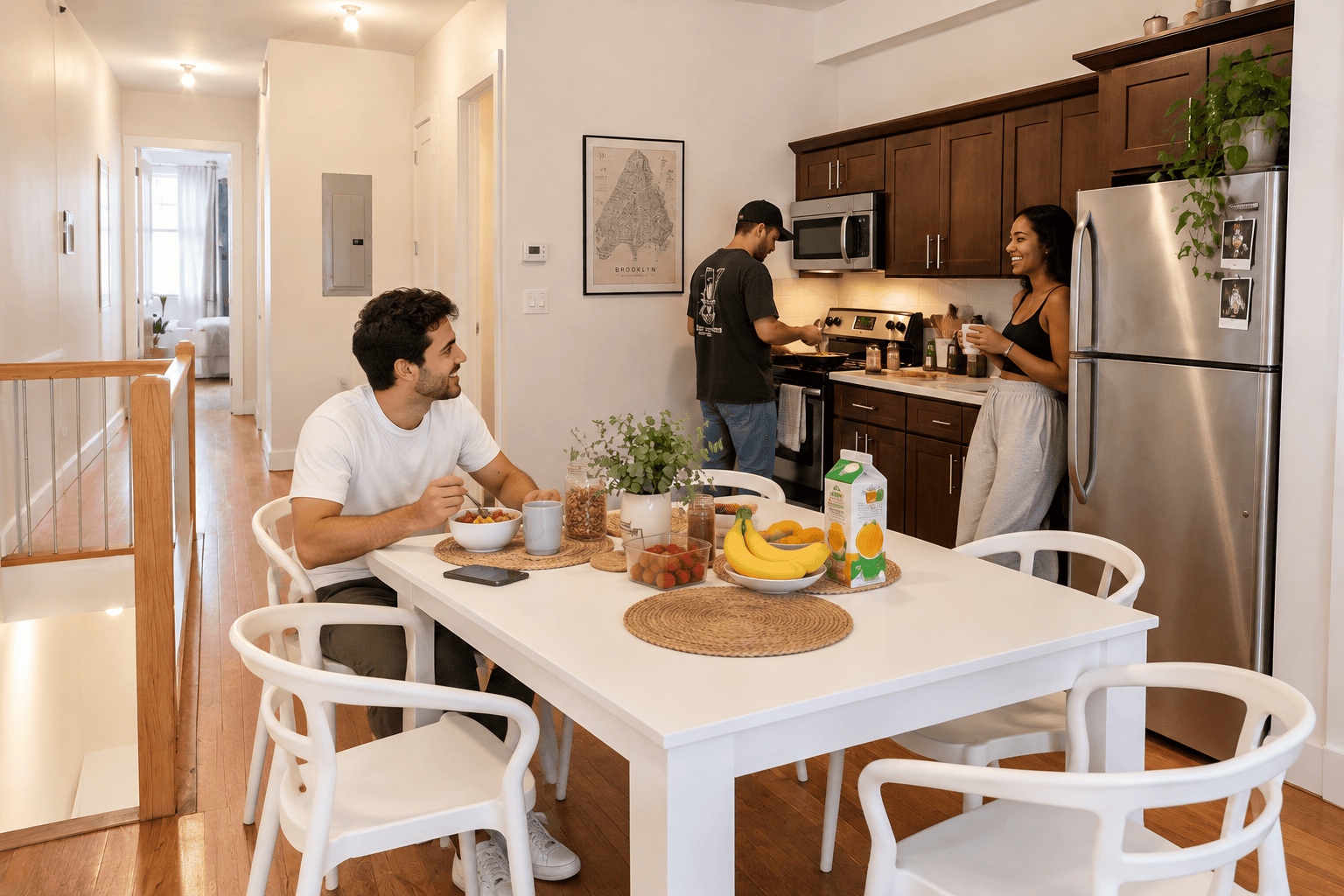
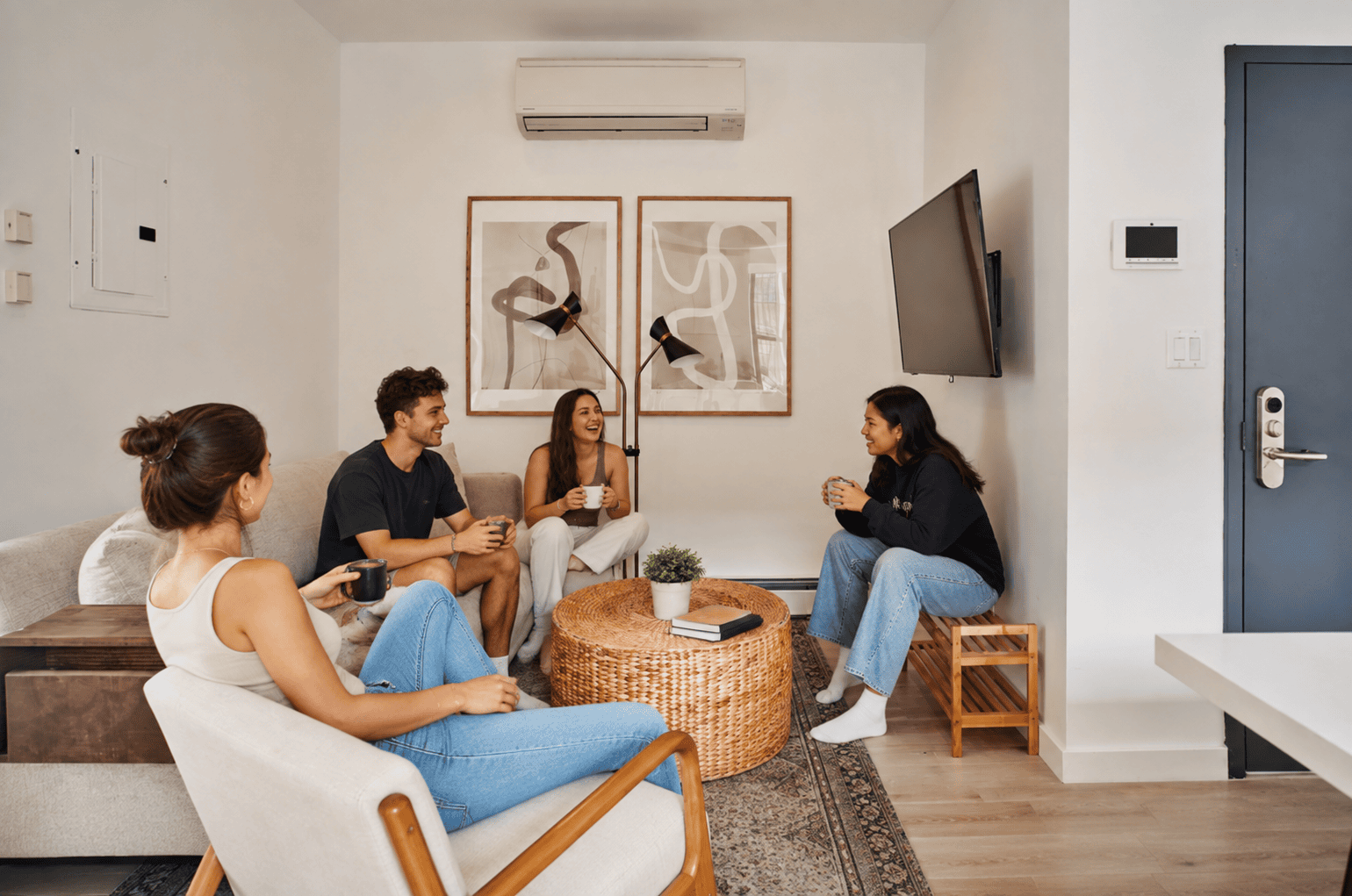
If $4,000 or more a month for an apartment doesn’t fit your budget, a room in a shared home changes the math. With SharedEasy room rentals, rooms start from $840 a month, all-in: utilities, WiFi and weekly cleaning of common areas are included. Shared rooms (two single beds, same gender) run $840 to $1,129, and private rooms $1,400 to $2,369.
Brooklyn one-bedroom (Sept 2026 average)
Monthly price
$4,218, plus utilities and internet
Furniture
Bring your own
Broker and application fees
No landlord’s broker fee; check fee up to $20
Deposit
Up to one month’s rent
Lease length
Usually 12 months
U.S. guarantor or credit history
Often required
SharedEasy private room
Monthly price
$1,400 to $2,369, all-in
Furniture
Furnished
Broker and application fees
No broker fee, no application fee
Deposit
Deposit-Free Living on contracts shorter than 6 months
Lease length
From 1 month, month-to-month
U.S. guarantor or credit history
Not required
You can rent furnished rooms in NYC in Williamsburg, Bushwick, Bed-Stuy and Greenpoint in Brooklyn, on the Upper West Side and in Harlem in Manhattan, and in Ridgewood and Long Island City in Queens. Leases start at one month with no upper limit, so month-to-month rentals work for an internship, a semester or a first job. Your room is ready within 24 hours of the agreed check-in date.