Coliving is a communal lifestyle where people with similar values occupy a private room in a shared space. To understand co-living, it is essential to understand the concept of communal living.
Like single room occupancy, coliving spaces offer residents a personal space in a shared property. However, the occupants share other parts of the apartment, such as the kitchen, bathroom, living room, library, gym, and many others.
Residents in a shared community share not only the living spaces but also intentions, values, ideas, and interests. The commune includes people from different parts of life who have come together to learn from the experience of others and make new friends with whom they can have shared activities.
Today, coliving in NYC is filled with hundreds of thousands of students, workers, entrepreneurs, and young professionals because one of the most significant advantages of coliving is affordability. Co-living spaces are designed with residents’ budgets in mind, unlike other housing systems.
This cost-saving system allows you to save a lot of money while living in a furnished apartment. Coliving is the wave of the future and the solution to renting and living in the big city.
Residents won’t have any financial surprises since the price includes all the amenities and utilities. Likewise, you would have no difficulties getting and moving into a coliving space.
Aside from affordability, coliving systems help residents acquire new skills and learn fascinating ideas about the rich culture and history of other residents.
For instance, some residents give other flatmates business ideas while conversing on the terrace. As a result, room renting in Brooklyn and even Manhattan has never been more accessible.
Who chooses Coliving?
Various surveys have shown that the primary age group is 19-40. These are usually employees of different startup companies, freelancers, or students.
Basically, the shared housing arrangement can work with just about any individual. You are craving a breath of fresh air and need a new environment for a few months. You have got a new job far away from home and need to settle into a job well enough to be able to decide if you want to move down to this new environment permanently. This form of housing works best for people who are new to a city or for those who are looking to concentrate on their passions rather than deal with the stresses that come with moving into a new place.
How did it all start, and why?
It started in London, from 1933 to 1934, when Wells Coats designed the first shared living space in London called Isokon.
Due to rising real estate prices and the hardships of World War II, many people were forced to move in with each other in shared spaces. These spaces were laundry rooms, workspaces, kitchens, and even shared living rooms.
However, after the war, this way of living declined and failed. Therefore, we could say that cohabitation was popularized again between 2014 and 2015 when real estate prices skyrocketed, and several companies offering this type of housing were established. The co-living wave took off in major cities like New York and London, and many experts predict that the industry will expand enormously due to the rising prices we’re experiencing. Co-living is a favorite of millennials in today’s world, and some refer to it as adult dorms.
Coliving in The U.S.: Where? Why? How Much?
In the United States, most tenants take advantage of coliving in big cities. San Francisco, New York, Los Angeles, etc., with their exorbitant home prices and expensive cost of living, are hotspots for coliving.
The average monthly price of Coliving in the USA is $ 1,400. But Coliving is competitive, with some options starting at $800 per month.
Best U.S. coliving places
We recommend Los Angeles, San Francisco, and New York as the best coliving cities.
However, even these cities have their neighborhoods and more expensive apartments.
For instance, coliving in specific neighborhoods in Manhattan can be more expensive than coliving in Brooklyn, but that may vary depending on the location, the amenities and services you require, and the length of stay.
You can customize your search from the many offers on our website. Also, don’t forget to get in-depth information in our blogs, Facebook Page, and Instagram.
Coliving – How much is it?
Coliving prices depend on what you want.
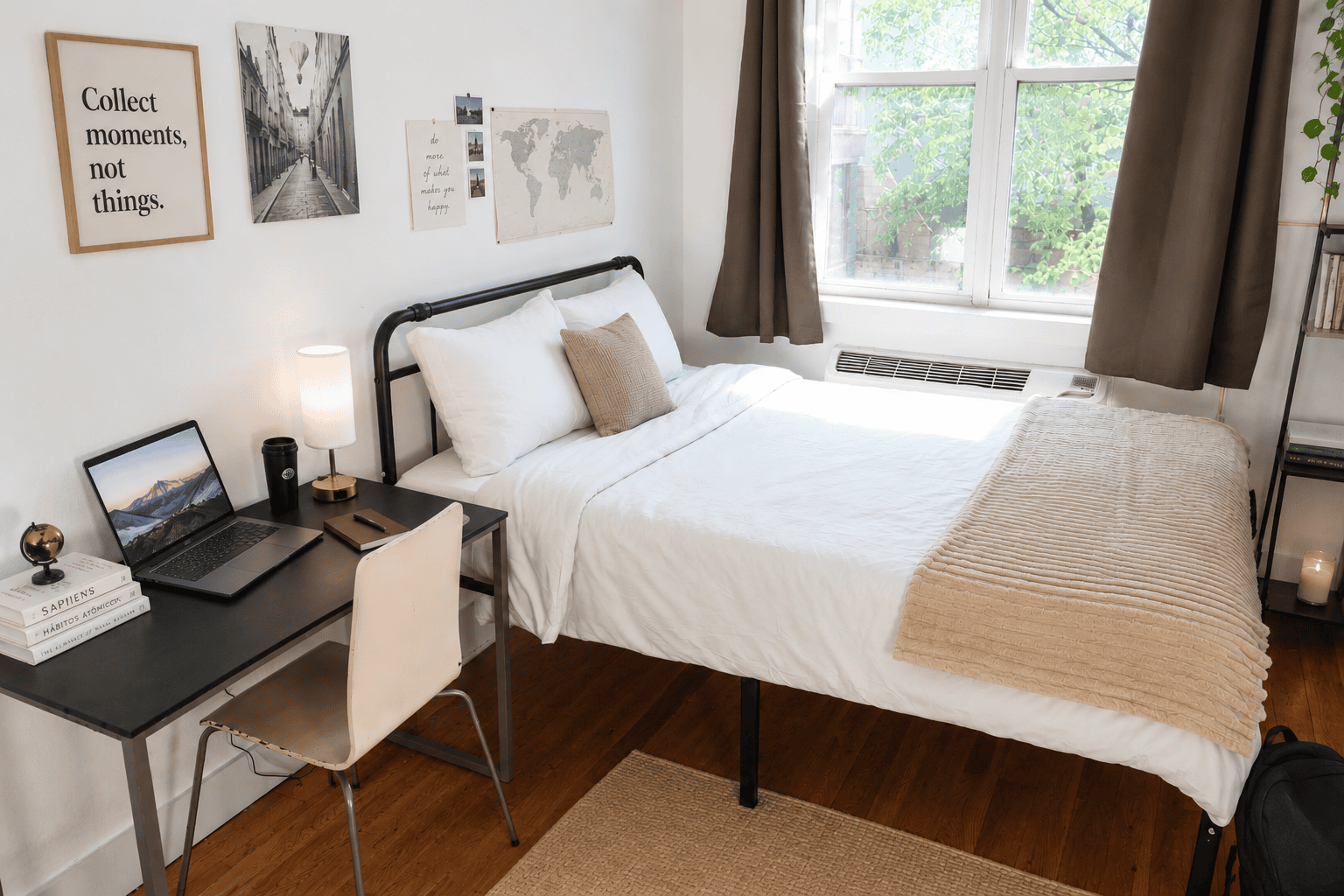
For example, if you are looking for a separate room with a queen-sized bed, a work desk, wifi, a private closet, and an en suite bathroom, your monthly fee can be higher than $2000.
At the same time, if you can share a bathroom with your roommates, the price can decrease significantly. If you need a room with a particular atmosphere or design, best believe you’ll be paying for that experience.
The location also means a lot, and the facilities offered by each home. Some homes have amenities like a gym, game room, cleaning services, or outdoor areas for parties and community events. The average cost for those spaces can range from $ 1,500 to $ 2,000 a month.
However, if the price is more your determining factor and if you have a volatile income or are in-between jobs and a shared space will meet your needs, prices can range from $700 per month.
Where is Coliving Most Popular?
It’s no secret that Asia is overcrowded. Especially cities as big as Hong Kong. Coliving is one solution to this pervasive problem of overcrowding.
More and more people advertise their apartments as coliving spaces. As a result, they save money, meet new people, and enjoy the advantages of coliving.
Alexandria Lafci, an author, stated that by 2050, up to 90% of people would live in cities and only 10% in the suburbs. This in itself shows that the coliving business will overgrow.
Coliving is the solution to the problem of overcrowded cities. If Alexandria’s prediction is accurate, cities will be overpopulated and inevitably overpriced, which will force people to look for more affordable options. Coliving is the simplest way to do it.
The co-living lifestyle is proliferating in urban environments; whether you’re a tenant or a landlord, now is the best time to check out Coliving.
In Silicon Valley, for instance, they came up with the concept of a HUB. That’s how Facebook began – they believed in moving people with common interests into one house and working on one project.
Coliving is Changing the Way We Live
Imagine this scene. You arrive in New York City with high hopes of experiencing the “bright lights” effects of the City that Never Sleeps.
You have no idea what to expect when you arrive. YOU HOPE you are not a victim of a scam or an apartment hunting horror story.
Now imagine that before you even arrive, you have a name, a contact on the property who you can call with questions, who is expecting you, who will welcome you.
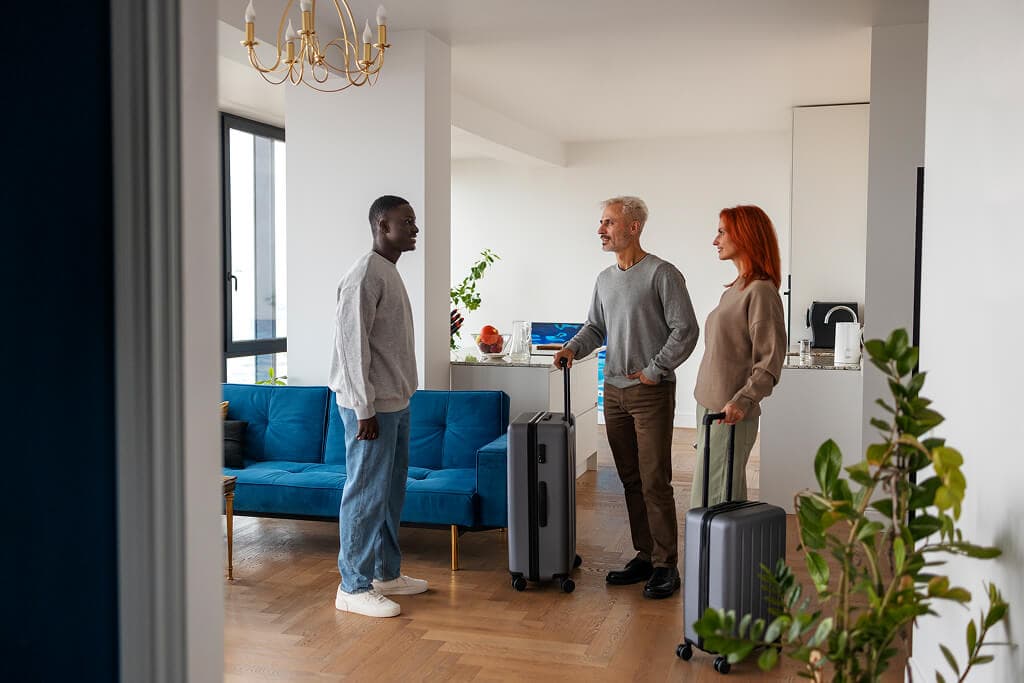
You step out of that cab, or off the subway, and are met at the door. The staff helps you with your luggage, and you meet new fellow travelers, transitioners, and students.
Imagine you are beyond delighted with the designer touches and cleanliness that goes beyond what you saw in the pictures. You realize that you are not alone. You are now a part of the collective.
Coliving is disrupting New York City’s short-term and long-term housing process.
Big cities are prime for coliving as they offer a way around the hurdles and allow for a solution to solving problems with student housing in New York, short-term rentals, and intern housing in New York City. Traditionally, there were few options for NYC temporary apartments beyond the Airbnb and extended-stay hotels.
The coliving culture goes beyond the practical and meets humanity’s most basic need, community.