City living has changed a lot over the past decade. What used to be a simple choice between renting alone or splitting costs with roommates has evolved into something more flexible and, in many ways, more intentional. Coliving has entered the picture as a modern alternative, offering structure, community, and convenience in a way that traditional shared housing never really did.
If you’re trying to decide between coliving and living with roommates, the choice is not just about rent anymore. It’s about lifestyle, time, social connection, and how much effort you want to put into managing your living situation. This guide breaks everything down clearly so you can make a decision that actually fits your life, not just your budget.
Quick Summary
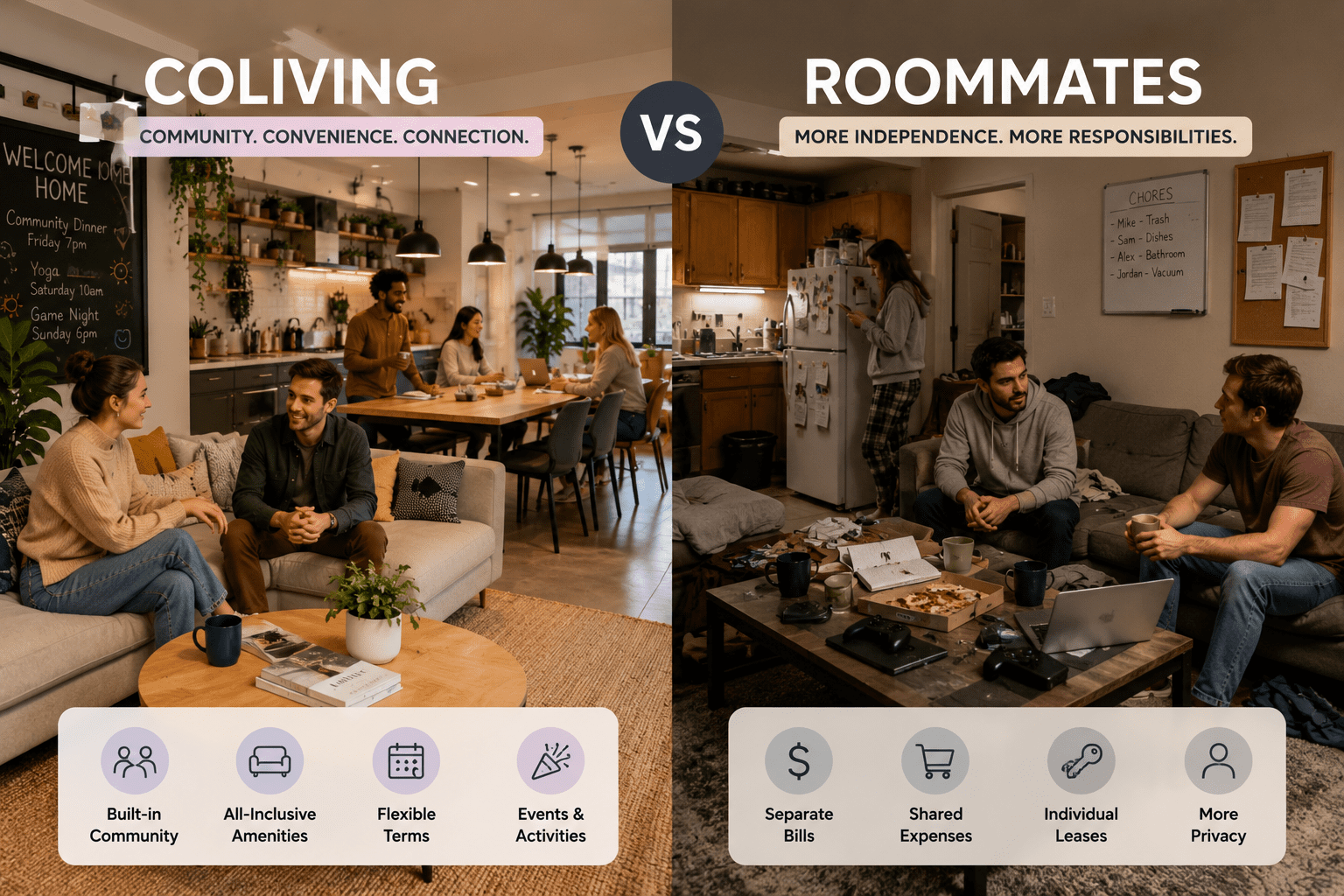
Coliving and living with roommates both fall under the broader concept of shared housing, but they offer very different experiences. Coliving is a structured, professionally managed solution that focuses on convenience, flexibility, and community. It typically includes furnished spaces, utilities, cleaning, and social opportunities within one monthly payment.
Living with roommates, on the other hand, is more traditional and self-managed. It often requires coordinating rent, bills, and household responsibilities with others. While it can sometimes be more affordable, it also demands more time, effort, and communication.
The key differences between the two options come down to how much structure and support you want. Coliving simplifies many aspects of daily life and is especially appealing for people moving to new cities or seeking a social environment. Roommate living offers more independence and control but can be less predictable depending on who you live with.
Coliving also stands out for its flexibility, often allowing shorter lease terms and easier transitions between locations. It provides built-in opportunities to meet people and form connections, which can be valuable in large urban environments.
However, both options have challenges. Privacy, lifestyle differences, and potential conflicts are factors to consider regardless of the choice. The decision ultimately depends on your personal priorities, including budget, lifestyle preferences, and how much effort you want to invest in managing your living situation.
For those looking for a streamlined, community-focused experience, coliving offers a modern approach to city living. For those who prefer a more traditional and customizable setup, living with roommates remains a viable option.
Introduction to Coliving and Roommates
Before comparing the two options, it helps to understand what each one really means today. While they may seem similar at first, the experience of living in each setup can feel completely different.
What Is Coliving?
Coliving is a modern housing model designed for people who want a shared living environment without the usual complications. Instead of independently renting an apartment and finding roommates yourself, you move into a fully managed space where everything is already set up.
These spaces are usually furnished, professionally maintained, and include shared areas like kitchens, lounges, and sometimes coworking zones. Utilities, cleaning services, and even community events are often included in a single monthly payment.
What makes coliving different is not just the physical setup but the intention behind it. It’s built around creating a social environment where people can connect easily, especially in large cities where making friends can be difficult.
What Does Living with Roommates Involve?
Living with roommates is the traditional way of sharing housing costs. You either move into an existing apartment with other tenants or find people to rent a place together.
This setup usually requires more personal involvement. You’ll need to coordinate rent payments, split bills, manage household responsibilities, and handle any issues that come up between housemates.
The experience depends heavily on the people you live with. If everyone is aligned, it can work well. If not, it can become stressful quickly.
What Is Shared Housing or Flat-Share?
Shared housing, also known as a flat-share, is a broader term that includes both coliving and roommate arrangements. It refers to any situation where multiple people live in the same property and share certain spaces.
The key difference lies in structure. Traditional flat-shares are usually informal and self-managed, while coliving spaces are organized and professionally operated.
Key Differences Between Coliving and Roommates
While both options involve sharing a living space, the way they function day to day is quite different.
Community and Social Interaction
One of the biggest differences is how social interaction happens.
In a coliving environment, community is part of the design. Events, shared spaces, and curated experiences make it easier to meet people. Whether it’s a casual dinner, a networking session, or a group activity, interaction is encouraged.
With roommates, social interaction is unpredictable. Some households become close-knit, while others remain purely functional. There’s no built-in structure to help people connect.
Private vs Shared Spaces
Coliving typically offers a balance between private and shared areas. You usually have your own bedroom, sometimes with a private bathroom, while common areas are shared with others.
In a roommate setup, the division of space depends entirely on the apartment layout. Privacy can vary widely, and shared areas may not always be well-maintained unless everyone contributes equally.
Lease Terms and Flexibility
Coliving spaces are known for flexibility. Many offer short-term leases, easy move-ins, and fewer administrative hurdles. This is especially useful for people who relocate frequently or are not ready to commit long-term.
Traditional roommate arrangements often require longer leases, deposits, and more paperwork. Leaving early can be complicated unless you find someone to replace you.
Professional Management and Amenities
Coliving spaces are professionally managed, which means maintenance, cleaning, and general operations are handled for you. Many also include amenities like high-speed internet, cleaning services, and shared workspaces.
With roommates, everything is self-managed. If something breaks or needs attention, it’s up to the tenants to resolve it.
Benefits of Coliving Compared to Roommates
Coliving has gained popularity for a reason. It addresses many of the common frustrations associated with traditional shared housing.
Cost-Effectiveness and Affordability
While coliving may seem more expensive at first glance, it often includes multiple costs in one payment. Rent, utilities, internet, and cleaning services are bundled together, which can make budgeting easier.
When you factor in time saved and fewer unexpected expenses, it can be a practical option.
Built-in Community Events and Networking
Coliving spaces often host events that encourage interaction. These can range from casual gatherings to professional networking opportunities.
For people moving to a new city, this can significantly reduce the time it takes to build a social circle.
Convenience and All-Inclusive Pricing
One of the biggest advantages is simplicity. You don’t need to set up utilities, buy furniture, or manage multiple payments. Everything is handled in one place.
This makes moving in and out much easier compared to traditional setups.
Flexible Lease Terms
Flexibility is a major benefit, especially for people with changing plans. Whether you’re staying for a few months or longer, coliving spaces usually offer options that fit different timelines.
Drawbacks and Challenges
Neither option is perfect. Understanding the downsides helps you make a more realistic decision.
Privacy Concerns
Even with private rooms, coliving still involves sharing common areas with multiple people. This can feel limiting for those who value complete privacy.
Roommate setups can sometimes offer more control over who you live with, which may improve comfort levels.
Potential for Conflicts
Sharing space always comes with the possibility of conflict. In coliving, this is usually managed by staff, but differences in habits can still arise.
With roommates, conflict resolution depends entirely on communication between tenants, which isn’t always easy.
Limited Control Over Living Space
In coliving, you typically cannot personalize your space beyond a certain point. Furniture and layout are already defined.
With roommates, you may have more flexibility to decorate or arrange shared spaces, depending on the agreement.
Differences in Lifestyle Preferences
Living with others means adapting to different routines, schedules, and habits. Whether it’s noise levels, cleanliness, or social preferences, differences can affect your experience in both setups.
Types of Coliving Spaces
Coliving is not a one-size-fits-all concept. There are several variations designed to meet different needs.
Apartment-Style Coliving
This setup resembles a traditional apartment but is fully furnished and managed. Residents share common areas while maintaining private bedrooms.
Shared Houses
Shared houses offer a more traditional feel with multiple residents living under one roof. These spaces often have larger communal areas and a stronger sense of community.
Communal Housing Units
These are designed with shared living as the main focus. Spaces are optimized for interaction, with open layouts and multiple shared facilities.
Villa-Style and Townhouse Coliving
These options provide a more spacious and residential experience. They are often located in quieter areas and offer a balance between community and privacy.
Micro-Studios and Hybrid Models
Some coliving spaces combine private studio units with shared amenities. This hybrid approach appeals to those who want more independence while still being part of a community.
Planning Your Move to a Coliving Space
Making the transition to coliving requires some preparation, especially if you’re used to traditional housing.
The Ultimate Checklist Before Moving In
Before committing, consider:
- What is included in the monthly cost
- The level of privacy offered
- House rules and expectations
- The type of community environment
- Lease flexibility and exit terms
Understanding these details helps avoid surprises later.
Popular Destinations for Long-Term Coliving
Coliving is especially popular in major cities where housing demand is high. Locations with strong job markets and active social scenes tend to offer more options.
These cities attract people who value flexibility, networking, and convenience in their living arrangements.
How to Make New Friends Quickly in a New City
Living in a shared environment makes meeting people easier, but taking initiative still matters.
Ways to connect include:
- Participating in community events
- Spending time in shared spaces
- Being open to conversation and collaboration
- Joining local activities outside your living space
Building connections takes effort, but coliving creates the right environment for it.