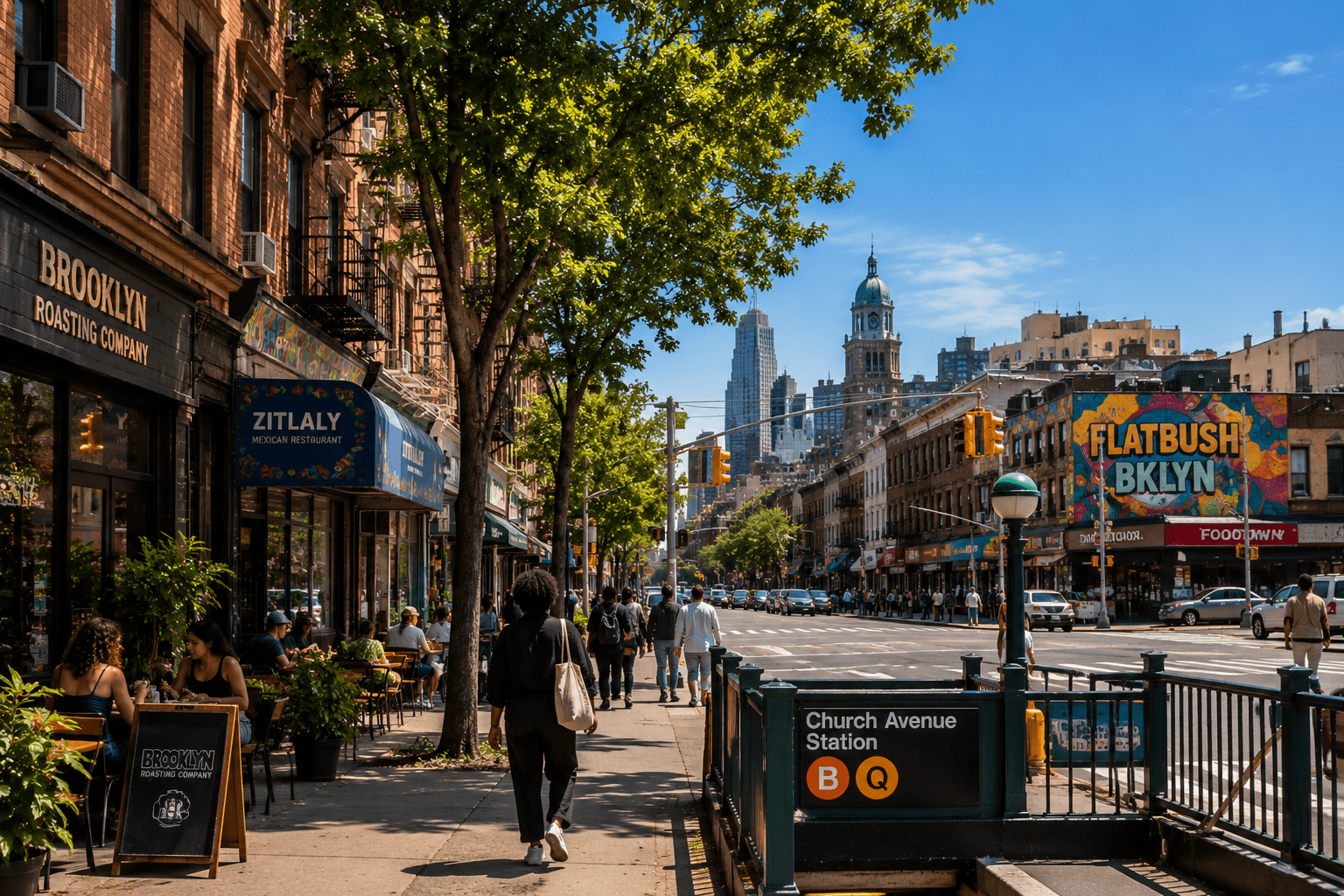
There’s a certain type of neighborhood in New York that tries to sell itself immediately. You walk in, and everything is obvious – the branding, the vibe, the intention. Flatbush doesn’t work like that. It’s not built for first impressions. It’s built for people who stay long enough to notice.
At first, it might feel like a mix of everything. One block is quiet, almost suburban in feel. The next is busy, filled with storefronts, music, and movement. It doesn’t follow a script. That unpredictability is exactly what defines it.
For a lot of younger renters, Flatbush comes up during the search phase, usually when balancing budget and location. But what starts as a practical choice often turns into something else. It becomes familiar. Comfortable. Real.
This guide breaks down Flatbush from a lived perspective, not just statistics or listings, but how it actually feels to move through the neighborhood, live in it, and understand it over time.
Quick Summary
Flatbush Brooklyn is a neighborhood defined by layers rather than a single identity. It has evolved over centuries, starting as farmland and gradually becoming a dense, diverse urban community. That history still influences how the area looks and feels today.
The neighborhood stands out for its cultural diversity, particularly its strong Caribbean influence. This shapes everyday life, from food and music to community events and interactions. Unlike more curated areas, Flatbush feels natural and lived-in.
Housing remains one of its main advantages. The real estate market includes older apartment buildings, rent-stabilized units, and some newer developments. While prices are increasing, the area still offers relative affordability compared to other parts of Brooklyn.
Transportation is another key strength. Subway lines and bus routes make commuting manageable, and nearby neighborhoods provide additional options for work, social life, and exploration.
Flatbush continues to evolve, but not through rapid or disruptive change. Instead, it shifts gradually, maintaining its identity while adapting to new residents and developments.
Overall, Flatbush is a neighborhood for people who value authenticity, accessibility, and a more grounded version of city living. It offers a balance between cost, culture, and connection, making it one of the more practical and livable areas in Brooklyn today.
Flatbush Neighborhood Overview
Flatbush sits in central Brooklyn, but calling it “central” doesn’t quite explain its role. It functions more like a connector, a place where different parts of Brooklyn overlap and interact.
It’s not defined by a single identity. Instead, it carries multiple layers at once: residential, cultural, practical, and evolving.
Geographic Boundaries and Setting
Flatbush doesn’t have sharp edges. Its boundaries blur slightly depending on who you ask, which is common in Brooklyn. Still, it generally stretches between Prospect Park and Midwood, bordered by Crown Heights, East Flatbush, and Ditmas Park.
What becomes clear quickly is how the neighborhood is structured.
Some streets feel open and calm, almost unexpectedly so. Others carry most of the activity – buses passing, people moving, shops staying busy throughout the day.
How the Space Feels on the Ground
Walking through Flatbush, you’ll notice:
- Longer blocks that give the area a more open feel
- A mix of residential and commercial spaces within short distances
- Less uniformity compared to newer or heavily redeveloped areas
Variation Within a Few Blocks
It’s common to move through:
- Quiet residential streets with older homes
- Busier corridors filled with local businesses
- Transitional areas where development is slowly happening
This variation is not accidental. It’s the result of long-term, layered growth rather than planned redevelopment.
History of Flatbush
Flatbush has one of the deeper historical roots in Brooklyn. Understanding that history helps explain why the neighborhood feels different from others.
Colonial Period
Flatbush began as a Dutch agricultural settlement in the 1600s. At that time, it wasn’t connected to what we now think of as New York City. It was land, used for farming, open, and largely undeveloped.
The name itself reflects that origin, tied to early descriptions of the landscape.
What Defined This Period
- Farming as the primary activity
- Minimal infrastructure
- Wide open land instead of dense housing
19th Century
As Brooklyn grew, Flatbush slowly transitioned into a more structured area. Roads were developed, transportation improved, and the neighborhood became more accessible.
It still retained much of its openness, but it was no longer isolated.
Key Shifts
- Increased movement between neighborhoods
- Early residential development
- Gradual population growth
20th Century
This is when Flatbush became what most people would recognize today. The expansion of subway lines connected it directly to Manhattan and other parts of Brooklyn.
With that came density.
Apartment buildings were constructed. Streets became more active. The population grew quickly.
At the same time, immigration shaped the neighborhood’s identity, bringing in communities that would define its cultural presence.
What Changed Most
- Housing density increased
- Public transportation became central
- Cultural diversity expanded significantly
21st Century Revitalization
Flatbush today is not undergoing dramatic transformation, at least not in the way some neighborhoods have.
Instead, change happens gradually.
You’ll see:
- Renovated buildings instead of full replacements
- New businesses opening next to long-standing ones
- A steady influx of younger residents
A Different Kind of Growth
- Less displacement-driven change
- More coexistence between old and new
- Slow shifts rather than sudden redevelopment
Demographics and Community Profile
Flatbush is one of the most culturally rich neighborhoods in Brooklyn. The diversity here isn’t segmented, it overlaps.
You hear it in conversations, in music coming from storefronts, in the variety of food options available within a few blocks.
Cultural Presence in Everyday Life
- Caribbean influence is especially strong
- Multiple languages spoken in daily interactions
- Local businesses reflecting community identity
What Makes It Different
Unlike neighborhoods where diversity feels curated or marketed, Flatbush feels natural. It’s not designed for presentation, it’s simply how people live.
Notable Landmarks and Attractions
Flatbush isn’t built around major tourist landmarks. Instead, its identity comes from smaller, more integrated elements.
What Defines the Area
- Historic residential streets
- Older buildings that haven’t been replaced
- Easy access to nearby green spaces
The Experience Over the Attraction
There’s no single destination that defines Flatbush. The experience comes from moving through it, noticing details, and understanding how everything connects.
Living in Flatbush
Living in Flatbush is often about finding a balance that feels realistic.
You’re not paying peak Brooklyn prices, but you’re also not disconnected from the rest of the city.
Housing Market and Real Estate
Flatbush Brooklyn real estate continues to attract renters looking for value without leaving the city.
Rental Conditions and Subsidized Housing
The housing mix is wide, which makes the neighborhood more accessible.
You’ll find:
- Older apartment buildings with rent-stabilized units
- Mid-century residential developments
- Some newer buildings integrated into older blocks
Accessibility Factors
- Subsidized housing options
- Shared living opportunities
- Variety in price points
Market Trends and Pricing
Prices have been rising, but they remain lower than many nearby neighborhoods.
Current Patterns
- Increased demand from younger renters
- Gradual rent increases
- Continued availability of older units
Flatbush still offers something that’s becoming harder to find – relative affordability within Brooklyn.
Neighborhood Lifestyle and Culture
Flatbush doesn’t feel curated for aesthetics. It feels lived in.
Community Organizations and Events
There’s a strong sense of local involvement.
What You’ll See
- Cultural celebrations tied to the community
- Street-level events that feel organic
- Neighborhood-driven initiatives
These aren’t designed for visitors. They exist for the people who live there.
Popular Places and Sights
The most defining places in Flatbush are often the least advertised.
Everyday Landmarks
- Small restaurants with strong local followings
- Grocery stores and markets reflecting cultural diversity
- Local businesses that have been around for years
You don’t need a guide. You discover them naturally.
Education and Schools
Flatbush offers a range of educational options, including public schools and smaller institutions.
Quality varies depending on the area, but there are consistent efforts to improve resources and access.
Public Safety: Police and Fire Services
Safety in Flatbush is similar to many NYC neighborhoods, it varies by block.
There is:
- Active police presence
- Accessible emergency services
- Community awareness around safety
Understanding the specific area you’re in matters more than general perception.
Getting Around Flatbush
Flatbush is well connected, which is one of its strongest advantages.
Transportation Options
Residents rely on:
- Subway lines connecting to Manhattan
- Bus routes across Brooklyn
- Walkable areas depending on location
Commute Reality
- Manhattan is accessible without long travel times
- Brooklyn neighborhoods are easily reachable
- Daily movement is manageable
Nearby Neighborhoods and Cities
Flatbush sits close to several distinct neighborhoods.
Within a short distance, you can reach:
- Crown Heights
- Prospect Lefferts Gardens
- Ditmas Park
Each offers a slightly different atmosphere, which adds flexibility without needing to move.
Local Insights and Resources
Understanding Flatbush requires looking beyond listings.
News and Community Updates
Changes in Flatbush happen gradually.
You’ll notice:
- Small-scale development
- Incremental improvements
- Ongoing community discussions
Resident Reviews and Testimonials
People who live in Flatbush often describe it as:
- Real
- Active
- More grounded than trend-driven neighborhoods
There’s also awareness that change is happening, especially in pricing.
Helpful Agencies and Services
Flatbush includes access to:
- Community support organizations
- Housing assistance
- Local services
These contribute to stability within the neighborhood.