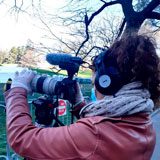
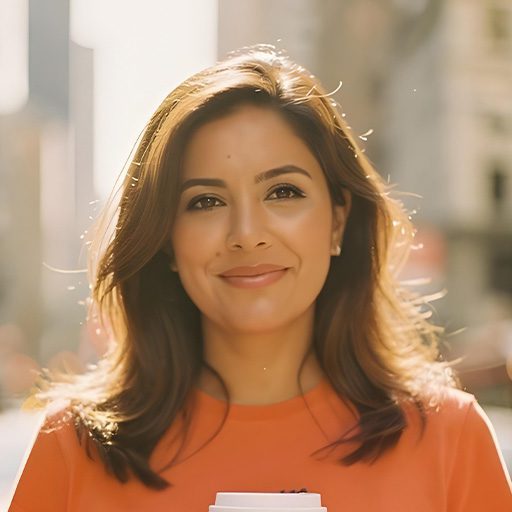
Our resident, Sophie Gousset, is a journalist for the French news channel Keep in News. She came here as an intern and ended up covering one of the most important stories in history. We asked Sophie about her viewpoints, her experiences, and what’s next.
You came here as an intern to cover things like the current cultural events, news topics, and matters in the US with the French New Channel: Keep in News. We remember when you were on the red carpet filming HBO premieres and fun pieces like that. Then, the whole world changed and your role changed and now you are covering one of the most important and dramatic events in history for NYC and your home country and around the world. What a time to be a journalist!
That’s true, our role as journalists for a small press agency in NYC has suddenly changed. We went from a backup for channels to the front line. I think that, unfortunately, this may be one of the greatest times to be a journalist, to be able to pass along stories to reach the French audience in a world that has been disconnected from any human contact
My original duty as a journalist intern was to give support to the journalist team at Keep In News, to provide help in gathering information in order to propose news pieces to channels, to find topics and then to help in the field to conduct interviews and filming. Even though I was given some freedom and trust from my company before that, we were not on the news front lines. We were covering stories “colder”, not hard news, we were covering topics such as concerts, political meetings, documentaries segments, social issues. And then suddenly, all of the channels reached out to us to provide interviews from doctors, labs, homeless, people losing their jobs…the whole spectrum of people here. New York and New Yorkers became the face of the Pandemic in America.
You have been on the front lines for the Pandemic, shooting in Central Park when the tents went up, in the homeless shelters interviewing and covering that situation, and covering stories about essential workers like the one where your team interviewed members of our staff in our Manhattan home. What were the most compelling stories or pictures that stick out in your mind as “pictures that sum up the state of NY during the Pandemic?”
I think that one of the most compelling pictures was a story I covered with my coworker. We were in Jamaica filming a gym club owner who was forced to close and had lost all of his income. For me, hearing stories of such dramatic situations for employees, or small business owners is painful when you know that in your home country they won’t feel this kind of sudden devastation. While we were talking with him about the situation and how he faced it, his friend, who is a nurse, shared her story. She told us all about how the outbreak was being handled in NYC hospitals, the desperation, and bad conditions need for supplies and she showed us some images of body bags in the hospital basement. This picture will stick in my mind for a long time, especially the two stories: the hospital where the situation is more than dramatic, and the small boxing club that will probably never be able to reopen. It gave a full-spectrum picture of the real impact on the millions of people in the US who are now facing poverty, misery, and hunger.
You became a lead reporter as many of your coworkers fell ill or would not go out. So, you really became one of those essential workers. Thanks for that. We appreciate you! What was YOUR story, the one that you filmed, and that was “your baby?”
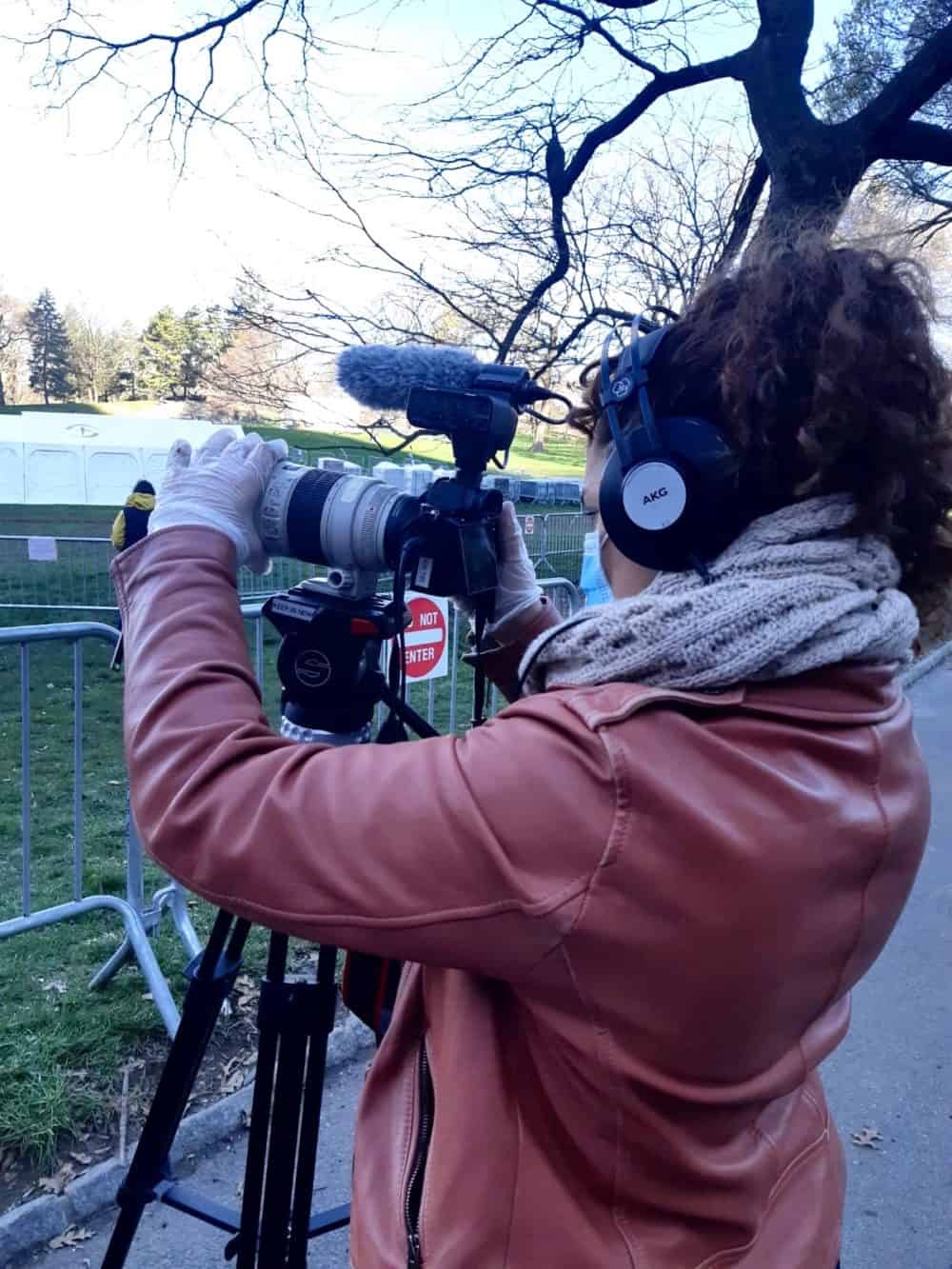
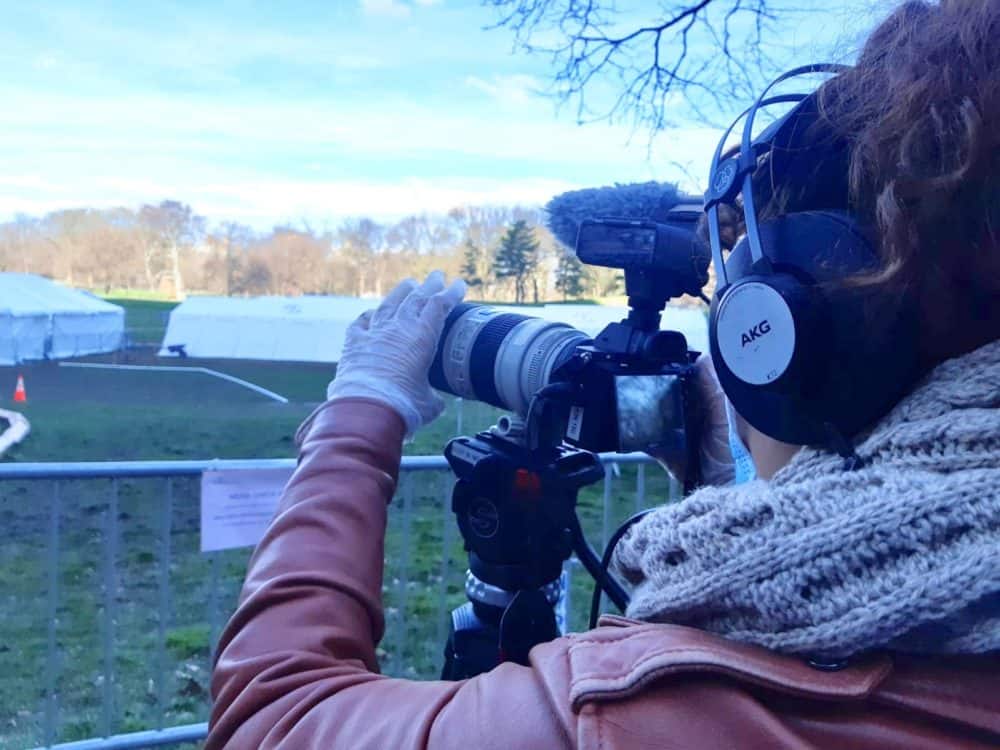
My “baby” was an overall news piece about the situation in NYC while the city became the epicenter. I interviewed a physician in front of the emergency unit and then went to Central Park to film the field hospital being set up. It was amazing to see that and to be able to cover the story. Especially because it was for the very first main channel in France that usually sends its own correspondent. But unfortunately, the Paris headquarters of the channel ended up broadcasting another news piece about France while a correspondent from the office was on live for this channel about NYC, so my story was never on air. Unfortunately, nobody will be able to see it, but it is still my baby. It was an amazing experience for someone just starting out like me to have that opportunity.
We New Yorkers say we are “NY Tough.” What has been your impression of NYC and New Yorkers during this time? What is your impression about how they have managed versus the rest of the world? Is there anyone thing that made you “proud to be a New Yorker?”
I do think New York is tough and New Yorkers are a unique population. The sense of community, strength, and solidarity here is very peculiar, I have never experienced it before. I was in NYC during the Paris terrorist attacks in 2015 and I felt the same feeling from New Yorkers then–they were coming to us for support, letting us know that we weren’t alone and encouraging us to keep being strong. Within the pandemic, the amount of support from NYC is incredible, and they do understand the necessity to protect everyone. That’s why compared to France the State didn’t need to threaten the people with fines to stay at home and keep social distancing. I hope New York will go through this time stronger and that what makes NYC so unique will be kept precious. NYC is built on communities, hundreds of languages, small businesses, this is the NYC charm and these qualities will, hopefully, stay the same.
I understand that you have been asked by Keep in News to stay on as a staff member through the Pandemic and maybe longer. Congratulations!!! That is a huge thing! How has this changed the way you see your role as a journalist suddenly going from intern to staff covering one of the most important stories in history?
I think that it has helped me gain confidence in my work. To be asked to stay on, and to be given this opportunity made me finally realize that “Yes, you are made for this”. I have wanted to be a journalist for the last 10 years and especially wanted to cover important stories and cover news like this that impacts so many people. Now, I finally think that I can be useful, helpful, and meaningful in this job.
What would be the “dream assignment” to cover after this is over and we all adjust to a new normal and the election looms over us?
My dream assignments are to keep being in the field and to help people, to help communities tell their stories and find their voice, and to keep raising attention on social issues and also conflicts. So I think my dream assignment after the lockdown in the US and in the loom of the presidential election will be to get an interview with Joe Biden and follow him while he is trying to defeat Trump, and of course to be here when he does it.
What is the very first thing you will do when you are released from the “Stay at Home Order?” (not related to your job).
I will run to a rooftop bar in Manhattan to enjoy a drink outside with the view of this fantastic city and I think I will feel filled with joy and blessed, “We did it, we came through”
Resident status verified by SharedEasy. Story told in their own words, edited by Sofia Alvarez, Content Editor at SharedEasy.